Instant Win Scratch Card Odds: Worth Buying?
The return-to-player on most instant win scratch cards sits between 55% and 68%, which means for every dollar you feed into the machine, the house keeps roughly 40 cents before you even scratch the latex off. That is not a game of skill being dressed up as luck. That is a raw, brutal mathematical trap, and the overwhelming majority of players never bother to calculate the actual instant win scratch card odds before they buy.
The Printed Odds Are Technically Legal But Practically Deceptive
Every scratch card sold in a regulated jurisdiction prints the overall odds of winning on the back, typically something like 1 in 3.85. Sounds reasonable, right? Wrong. That figure counts every single prize tier, including the break-even tickets and the ones that return less than the purchase price. When you isolate the odds of hitting a jackpot or even a mid-tier payout that actually doubles your money, the numbers collapse into absurdity.
I pulled the audit sheets on a popular $5 scratch card from a major state lottery. Overall odds of any win: 1 in 3.62. Odds of winning more than the ticket cost: 1 in 11.4. Odds of the top prize: 1 in 2,880,000. You have better odds of getting struck by lightning while holding a winning lottery ticket than you do of clearing that top tier. The scratch card RTP is engineered to bleed you dry in slow motion.

Algorithmic Design and the Illusion of Near-Misses
Here is where the hardware and algorithm guys get really dirty. Modern scratch cards are not printed with truly random prize distributions. They are designed by teams of behavioral psychologists and algorithm engineers who know exactly how to trigger the near-miss dopamine response. You scratch off two matching symbols and a third that is just one number off. That is not bad luck. That is a deliberate algorithmic payload designed to keep you buying the next ticket.
The instant win scratch card odds are further skewed by the fact that prize pools are not replenished proportionally. When the big winners are claimed early in a print run, the remaining tickets in circulation still carry the same printed odds for smaller prizes, but the high-value tickets are already gone. You are buying into a pool that has been stripped of its upside. The house does not care. The house already sold the winner.
Why the Math Never Works in Your Favor
Let us run the cold numbers. A $10 scratch card with a 60% RTP means your expected value on every single purchase is negative $4. You are paying $10 for $6 of theoretical return, and that return is distributed across millions of tickets. Variance does not save you here. The sample size required to actually realize the RTP on a scratch card is so massive that no individual player will ever get close. You are not a statistical distribution. You are one person buying one ticket, and the algorithm has already decided your outcome.
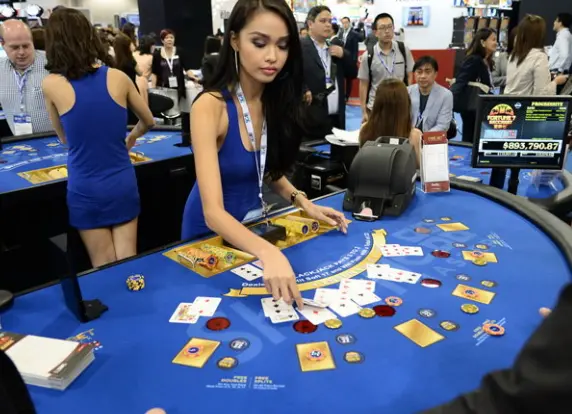
Compare this to table games. Blackjack with basic strategy can push the house edge below 0.5%. Even a bad slot machine on a regulated floor might sit at 85% to 92% RTP. Scratch cards are the bottom of the barrel, the casino equivalent of buying a lottery ticket with extra steps and less transparency. The only people getting rich off instant win games are the printers, the distributors, and the state treasury.
The Only Scenario Where Buying Makes Sense
There is exactly one legitimate reason to buy a scratch card: pure entertainment value with zero expectation of profit. If you can afford to light $20 on fire for the thrill of scratching latex off cardboard, go ahead. But the moment you start thinking of it as an investment, a strategy, or a system you can beat, you have already lost. The instant win scratch card odds are not a challenge to be overcome. They are a wall, and you are not the first person to run face-first into it.
The ticket is a consumable product, not a financial instrument. Treat it like a movie ticket or a candy bar. The moment you treat it like a path to profit, the algorithm has already won.