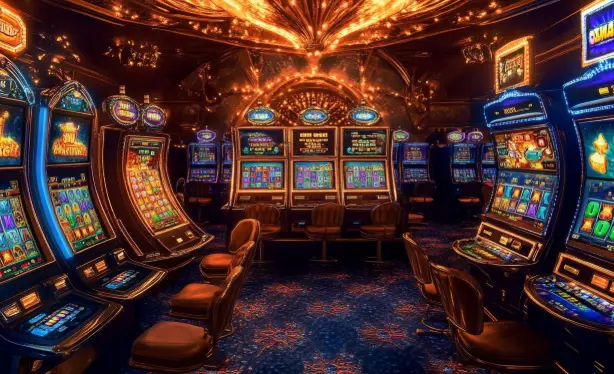
Slot Machine Session Timer: Why Set One?
Every spin you take without a hard stop is a debit against your bankroll that the house edge quietly compounds, and a slot machine session timer is the only mechanical brake that survives the dopamine fog of a hot streak. I have audited enough RNG logs and par sheets to tell you flatly: the math does not care about your feelings, and the moment you lose track of elapsed time, the volatility curve owns you.
The House Edge Is Patient, Your Attention Span Is Not
Slot machines are engineered around a fixed return-to-player percentage, but the real killer is time-on-device. A 96% RTP game still bleeds 4 cents per dollar wagered, and at 600 spins per hour on a $2 max bet, that is $48 of expected loss every sixty minutes. Multiply that across a three-hour unmonitored session and you have torched $144 in pure expected value without a single catastrophic spin. 🎰 A timer converts that abstract bleed into a visible countdown, and visible countdowns change behavior in ways willpower never will.
The psychological mechanism is loss aversion inverted. Players feel losses roughly twice as intensely as equivalent gains, but only when they are actively tracking them. Once you drift past the 45-minute mark, the brain reclassifies losses as entertainment spend and the wallet opens wider. Setting a timer forces periodic re-evaluation, which is exactly the moment most gamblers avoid.

Volatility Clustering and the Illusion of Control
Here is the hardware truth most players never internalize: modern slots use volatility clustering to concentrate payouts into tight bursts, and those bursts almost always arrive in the first twenty minutes of a session or deep in the tail. The middle stretch is dead air designed to keep you seated. A session timer that caps play at 30 to 40 minutes keeps you in the high-probability window and out of the grind zone where the reels punish endurance.
Vendors know this. That is why loyalty systems and comp clocks are calibrated to stretch sessions past the 90-minute threshold, where the house edge has already harvested the bulk of your buy-in. Your timer is a direct countermeasure against their session architecture.
Bankroll Arithmetic That Actually Works
Run the numbers before you sit down. If your session budget is $200 and the machine spins at 500 rounds per hour, a 30-minute cap limits you to roughly 250 spins. At a $1 average bet that is $250 of action against a 4% edge, or $10 of expected loss. Stretch the same budget across two hours and you double the expected loss to $20 while halving your variance-adjusted survival time. 🕒 The timer does not improve your odds per spin, it improves the ratio of entertainment to expected cost.
Use a hard alarm, not a soft reminder. Phone timers with a single chime get swiped away in under four seconds. Set a recurring five-minute alert that forces a physical action to silence, and pair it with a written stop-loss figure taped to the machine. The friction is the point.
Session Boundaries Are Your Only Real Edge
No timer will turn a negative-expectation game positive, and anyone who claims otherwise is selling something. What a timer does is enforce the discipline that separates recreational players from the degenerate tail: it caps the number of decisions you make under emotional duress. Every additional hour at the reels is another hour of decisions subject to sunk-cost reasoning and near-miss distortion.
Set the timer, honor the alarm, and walk on the first tick. The par sheet already knows how long you will stay if you do not.