
How Does the Gamble Feature Work in Slots?
The gamble feature in slot machines is a high-volatility side game that allows players to wager their latest win on a 50/50 proposition, typically a double-or-nothing scenario. This mechanic is not a random event but a separate, skill-based or chance-based mini-game governed by its own RTP (Return to Player) calculation, which is often distinct from the base game's RTP. 🎲
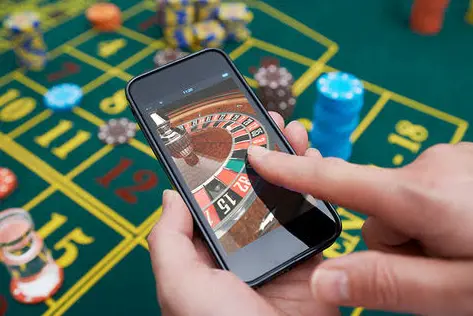
The Core Mechanics: Double or Nothing
When you trigger a winning spin, the gamble feature activates via an on-screen button. The most common implementation is a card color guess: you must predict whether a face-down card is red or black. A correct guess doubles your winnings, while an incorrect guess forfeits the entire amount. Some variants offer a suit guess (hearts, diamonds, clubs, spades) for a 4x multiplier, or a ladder gamble where you climb a prize ladder with increasing risk. The gamble feature in slots operates on a provably fair RNG (Random Number Generator) algorithm, ensuring each guess is independent and statistically random.

Mathematical Variance and Risk Profiles
From a mathematical standpoint, the gamble feature does not improve the base game's expected value. In a standard double-or-nothing gamble, the probability of winning is exactly 50%, but the payout is 2x. This creates a neutral EV proposition before considering house edge. However, if the gamble is capped at a maximum win amount, the effective EV drops below 50%. High-stakes players often use the gamble feature to amplify variance, targeting exponential bankroll growth at the cost of rapid depletion. 📈
Strategic Considerations and House Edge
Advanced players analyze the gamble feature's maximum bet limit and the base game's hit frequency. If the gamble cap is low, it is mathematically disadvantageous to use it. Conversely, if the cap is high and the base game has a low volatility, the gamble feature can serve as a volatility multiplier. The house edge in the gamble feature is typically derived from the cap, not the 50/50 probability. For example, a 50/50 gamble with a 10,000 credit cap introduces a subtle bias against the player when the potential win exceeds that cap.
Psychological Impact and Responsible Play
The gamble feature exploits the psychological principle of loss aversion and the thrill of immediate risk. It creates a fast-paced, dopamine-driven loop that can lead to impulsive decisions. Professional gamblers treat the gamble feature as a separate game with its own bankroll requirements. It is critical to set a loss limit and a win target before engaging. The gamble feature in slots is not a strategy to overcome the house edge; it is a tool for adjusting variance to match your risk tolerance. 🎰
Technical Implementation and RNG Certification
Reputable slot providers use certified RNGs tested by independent laboratories like eCOGRA or GLI. The gamble feature's RNG is often a separate module from the base game's reel spinning logic. This ensures that the outcome of a gamble is not influenced by previous spins or wins. The RTP of the gamble feature is often published separately in the game's help file, usually ranging from 94% to 98% before the cap is applied. Understanding this technical separation is essential for any serious player evaluating the true cost of using the feature.