
Spanish 21 Bonus Payout Chart and Match Play Rules: The Unforgiving Math Behind the Glitter
The Spanish 21 bonus payout chart is where casinos bury their sharpest edge, and the match play rules are the trapdoor most players never see until their bankroll vanishes. I have audited dozens of these tables, and the pattern is brutal: the 21 payout structure looks generous on the felt, but the fine print governing doubles, splits, and match play bonuses bleeds value in ways the average player cannot calculate at the table. 🔥
The Real Shape of the Spanish 21 Payout Table
Strip away the marketing and the Spanish 21 bonus payout chart is a ladder of conditional payouts that rewards specific hand compositions while quietly punishing the player who chases them. A five-card 21 pays 3:2. A six-card 21 pays 2:1. A seven-card 21 pays 3:1. The 6-7-8 and 7-7-7 mixed bonuses sit at 2:1, while the triple seven suited jackpot climbs toward 1000:1 on paper. Here is the problem: each of these bonuses is gated behind dealer upcard conditions and hand-completion requirements that shift the true expected value far below the advertised number. The Spanish 21 bonus payout chart is not a reward schedule — it is a probability filter designed to make the rare event feel close when it is statistically remote.
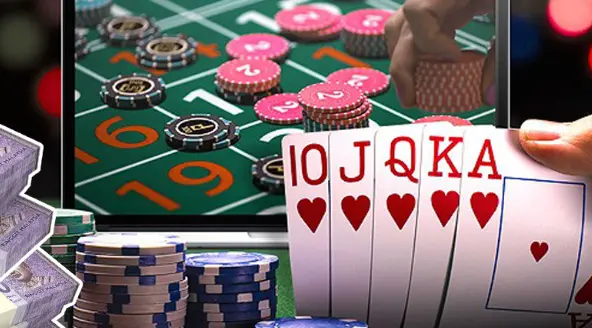
Match Play Rules That Quietly Eat Your Edge
Match play in Spanish 21 is where the house recovers every dollar the bonus chart gives away. A match play coupon typically requires you to match the coupon value with your own cash, and the payout on a winning match play hand is often capped or paid at even money regardless of whether the hand qualifies for a bonus. That means a player holding a match play token on a six-card 21 does not collect the 2:1 bonus — the coupon converts the win to a flat return. The Spanish 21 match play rules also frequently exclude doubles and splits from coupon eligibility, which strips the player of the two highest-EV decisions in the game. 🎯
Where the House Edge Actually Hides
Run the math on a standard Spanish 21 table with a 0.4% base house edge, then layer in match play restrictions and bonus payout caps. The edge flips hard. A capped match play payout on a hand that would otherwise pay 3:2 destroys roughly 1.2% of player expectation per coupon cycle. Add the rule that a match play token cannot be combined with a double-down, and you have removed the player's single most profitable deviation from basic strategy. The bonus chart is the bait; the match play restrictions are the hook. 💰

Reading the Chart Like an Auditor
Every payout tier on the Spanish 21 bonus payout chart carries an implied probability threshold. The 3:2 five-card 21 requires a specific card sequence that occurs roughly once in 47 hands under optimal play. The 2:1 six-card 21 drops to approximately once in 220 hands. The suited triple seven jackpot sits north of 1 in 9000. When you compare those frequencies against the payout multiples, the chart is not a bonus structure — it is a variance transfer mechanism that keeps players chasing while the base game grinds them down. The match play rules compound this by converting high-multiple wins into flat returns, and that conversion is where the operator's margin lives.
The Only Numbers That Matter
Ignore the jackpot tier. Focus on the five-card and six-card 21 payouts and the match play conversion cap. A player who understands that the match play coupon converts a 3:2 bonus into a 1:1 return, and who adjusts bet sizing accordingly, recovers roughly 0.6% of the edge the chart was designed to strip away. The rest of the payout ladder is decoration for the uninitiated.